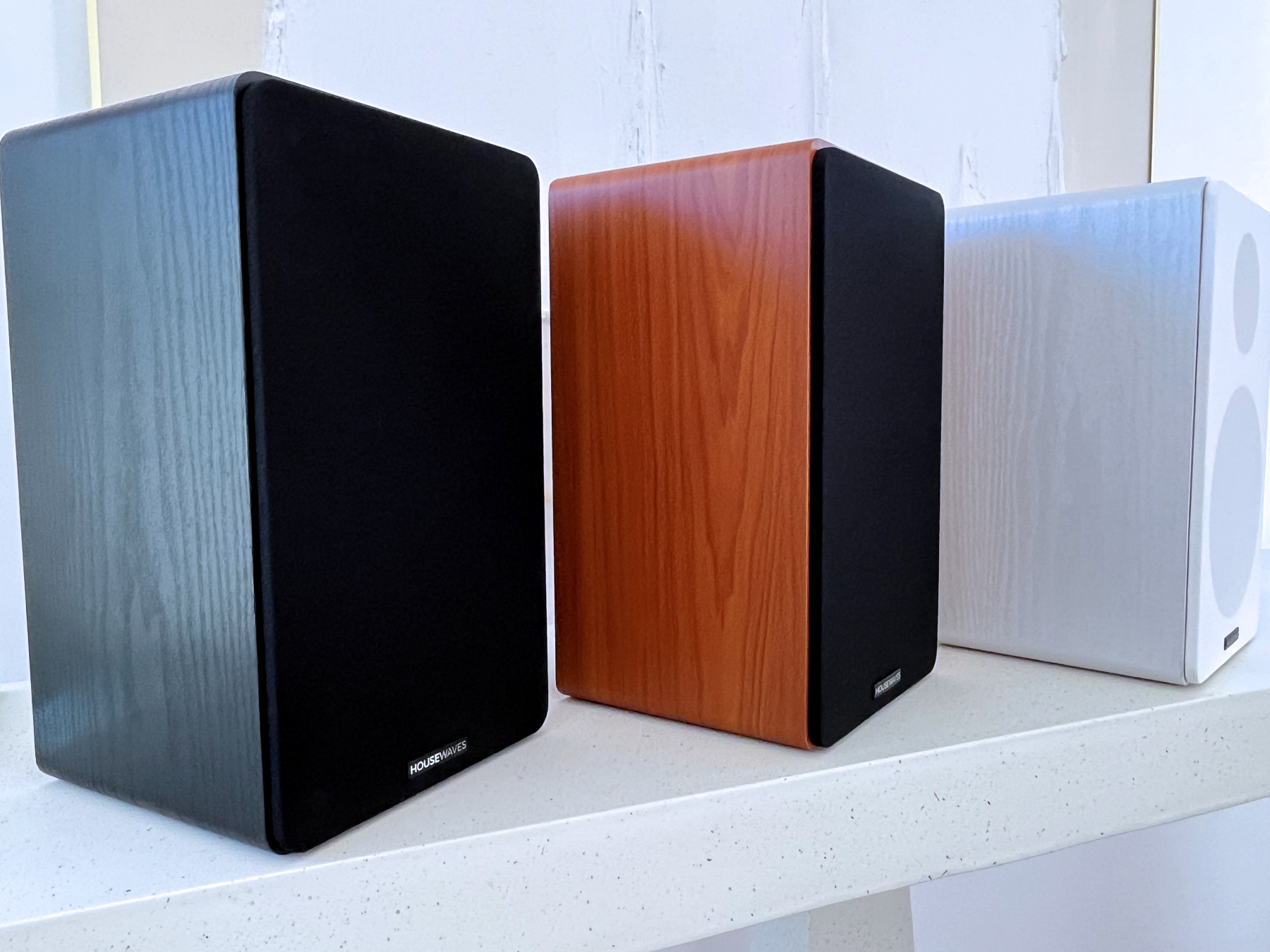
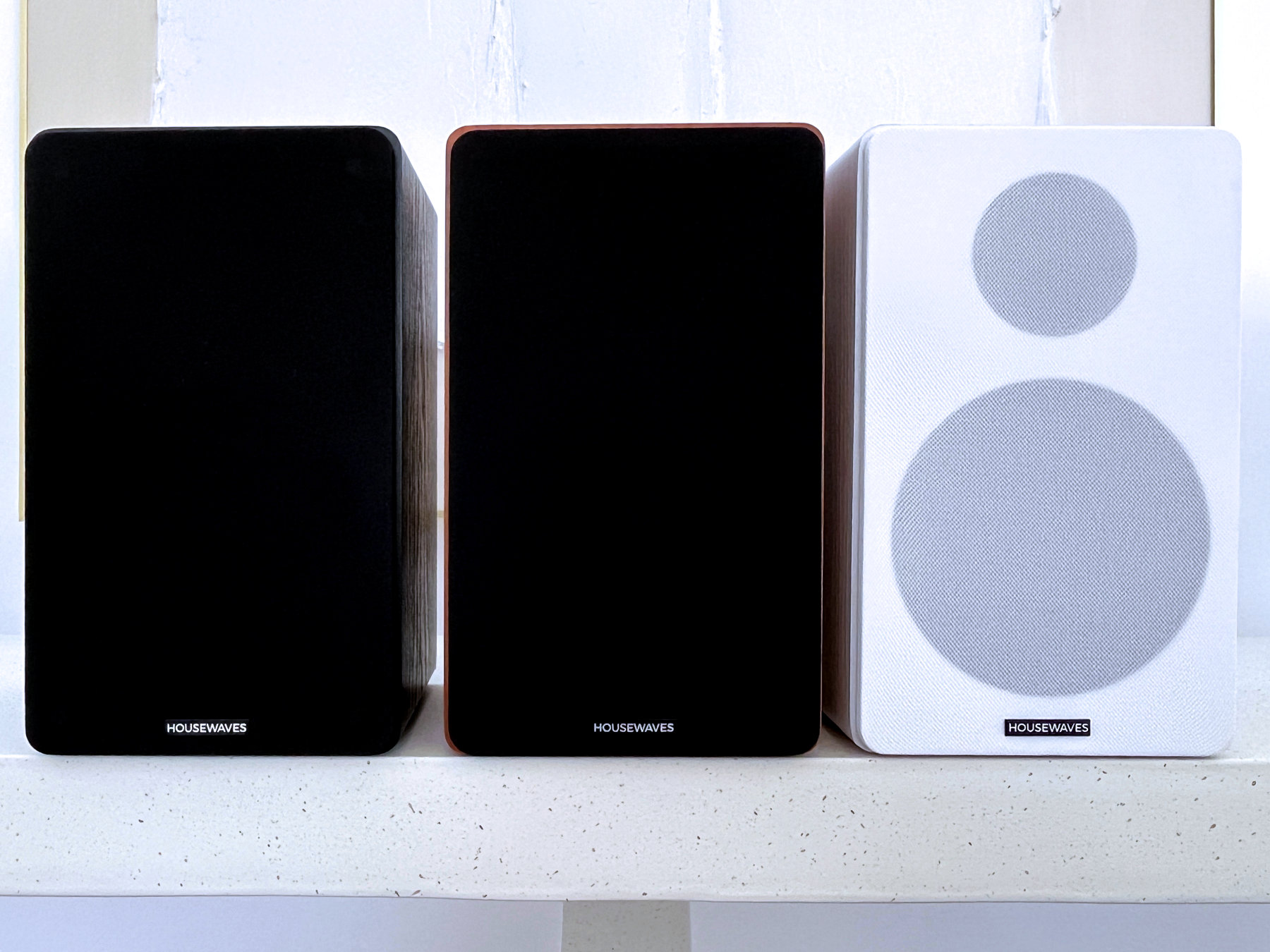
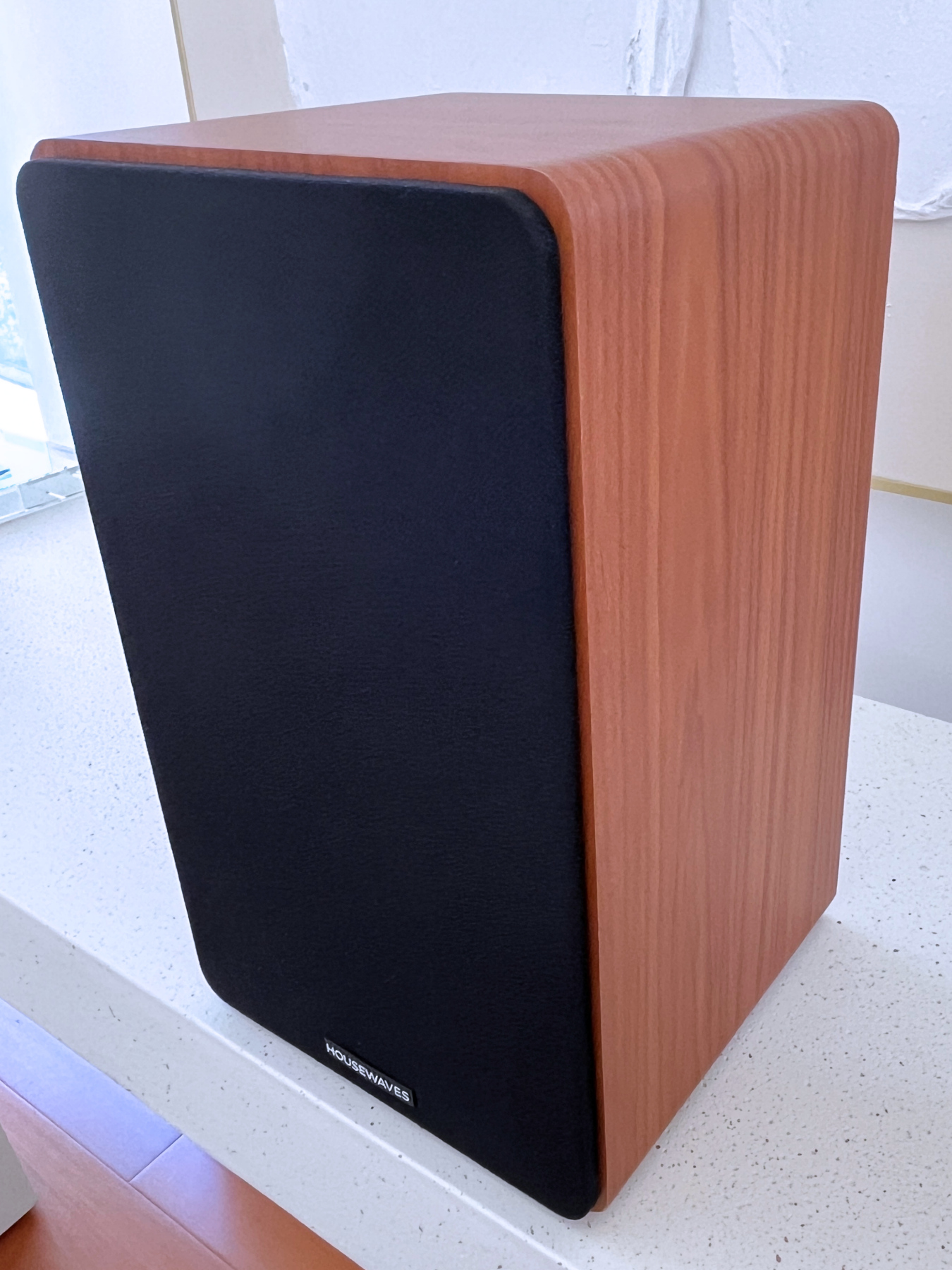
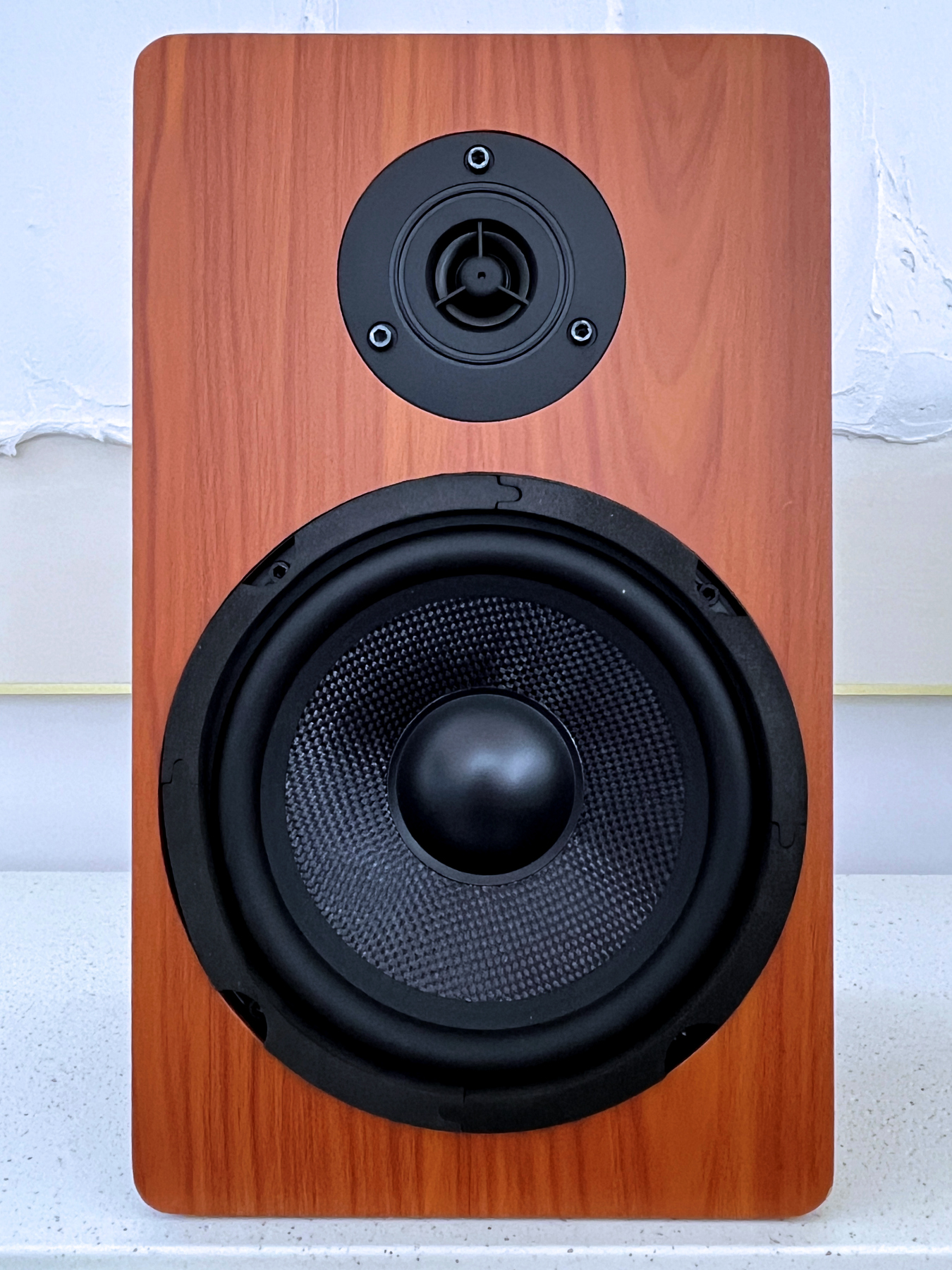
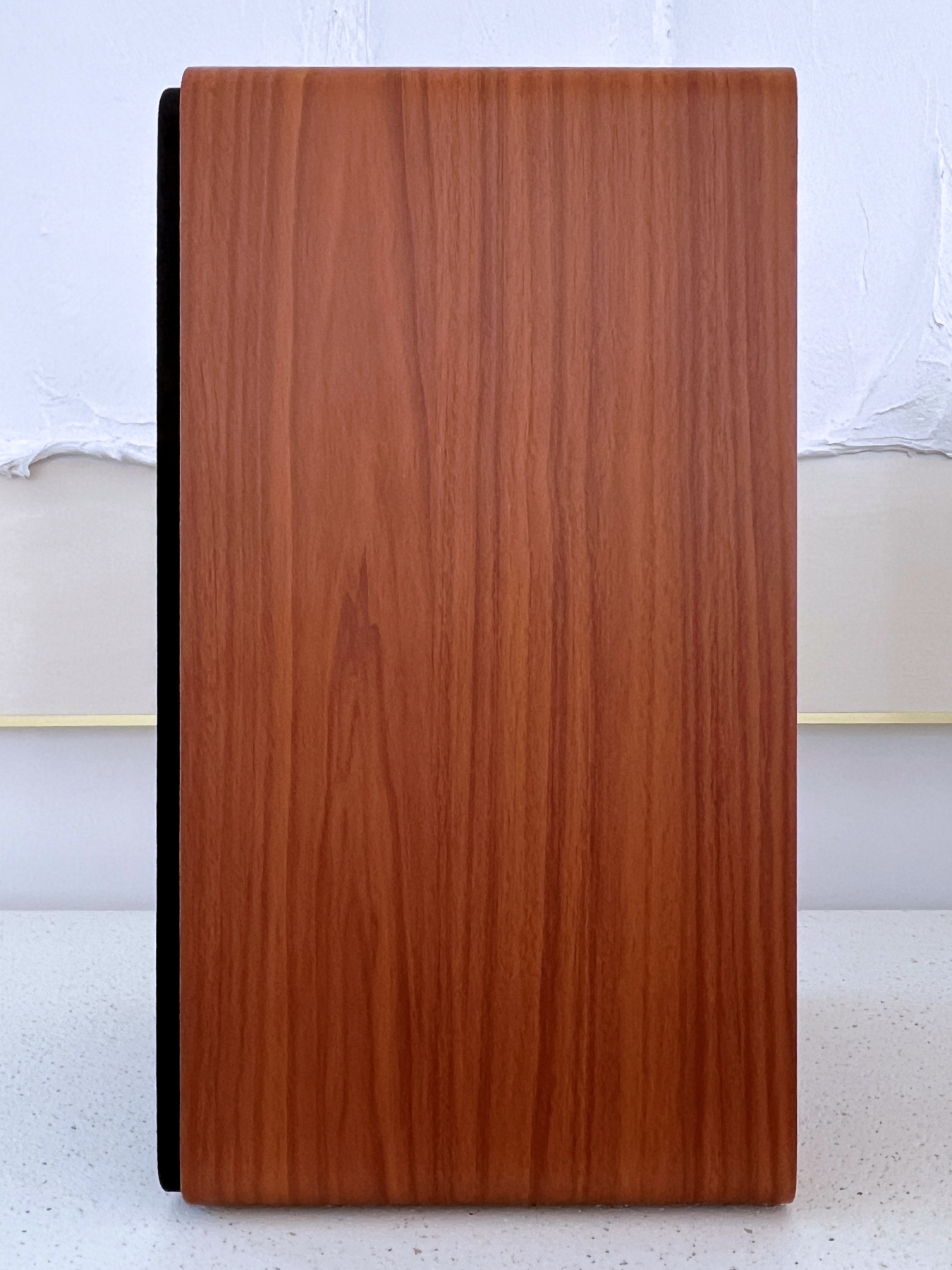
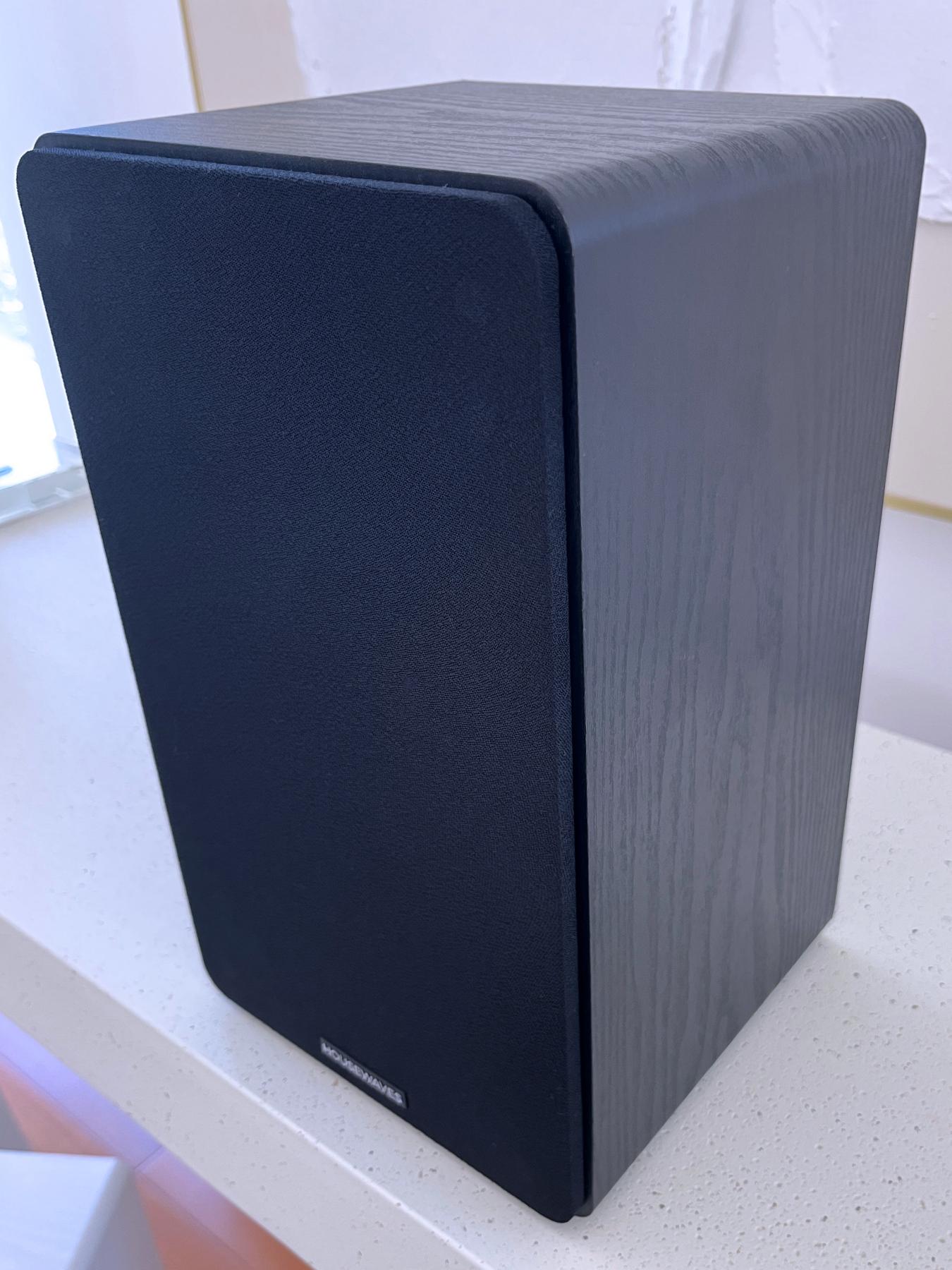
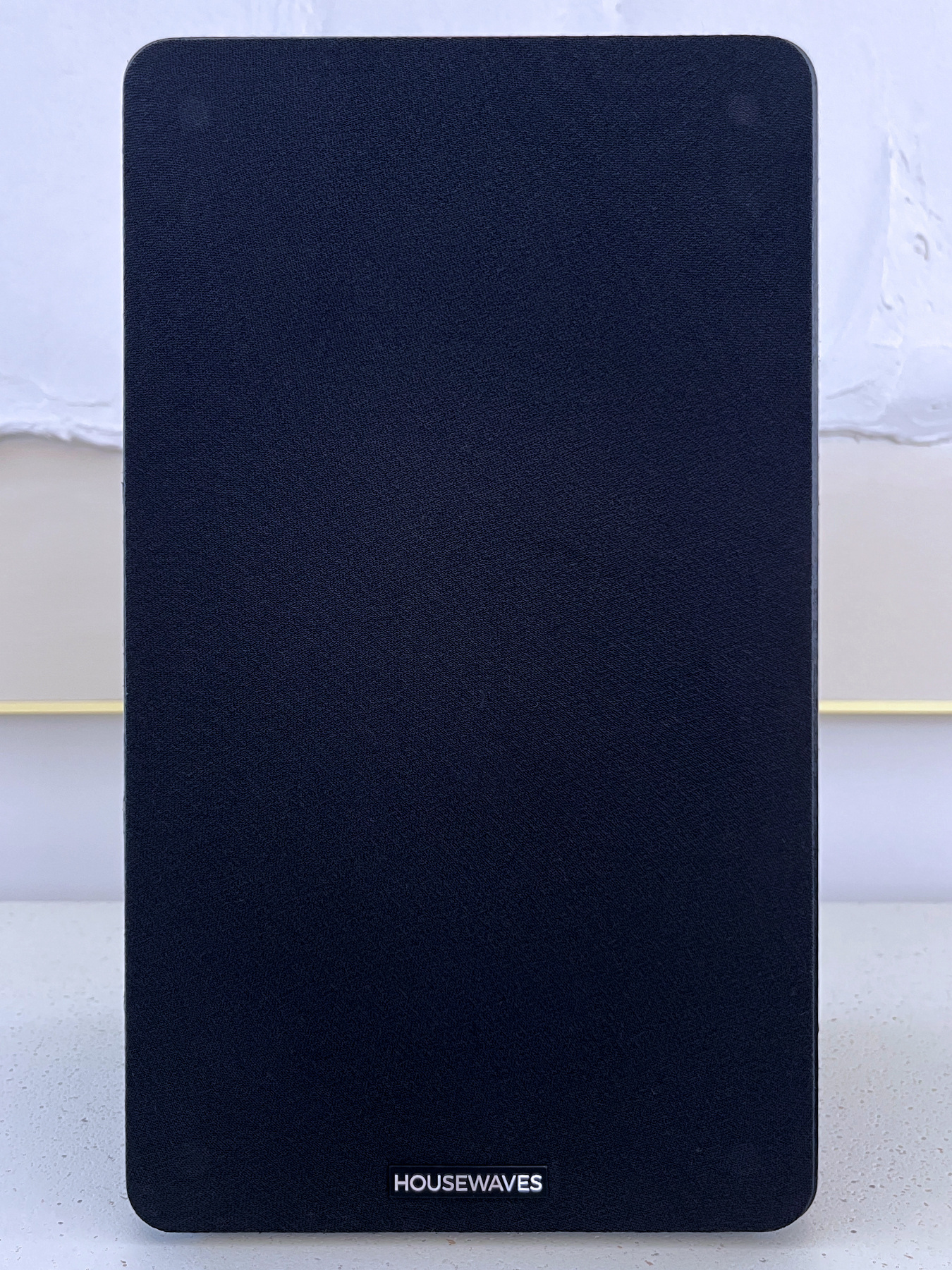
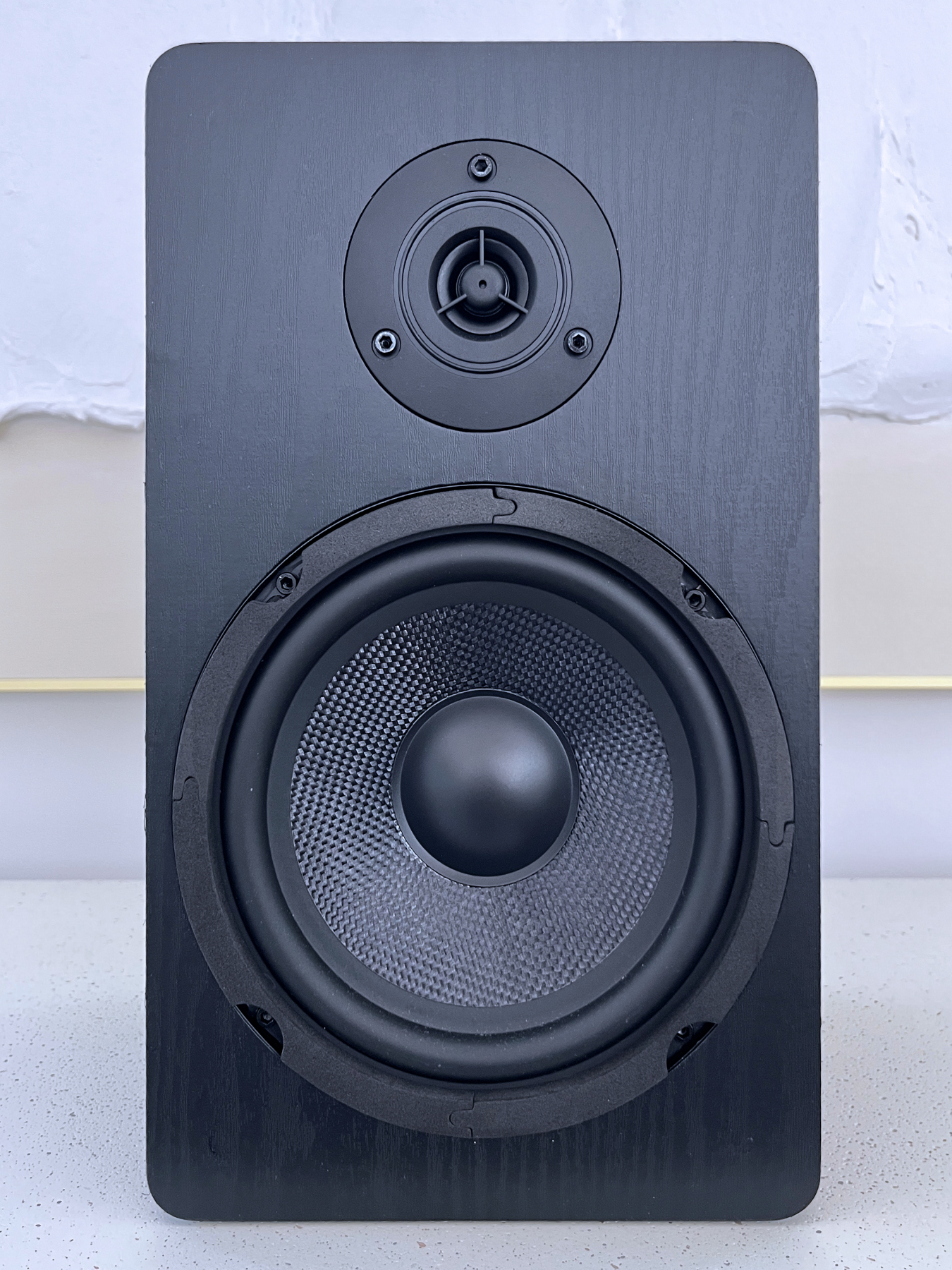
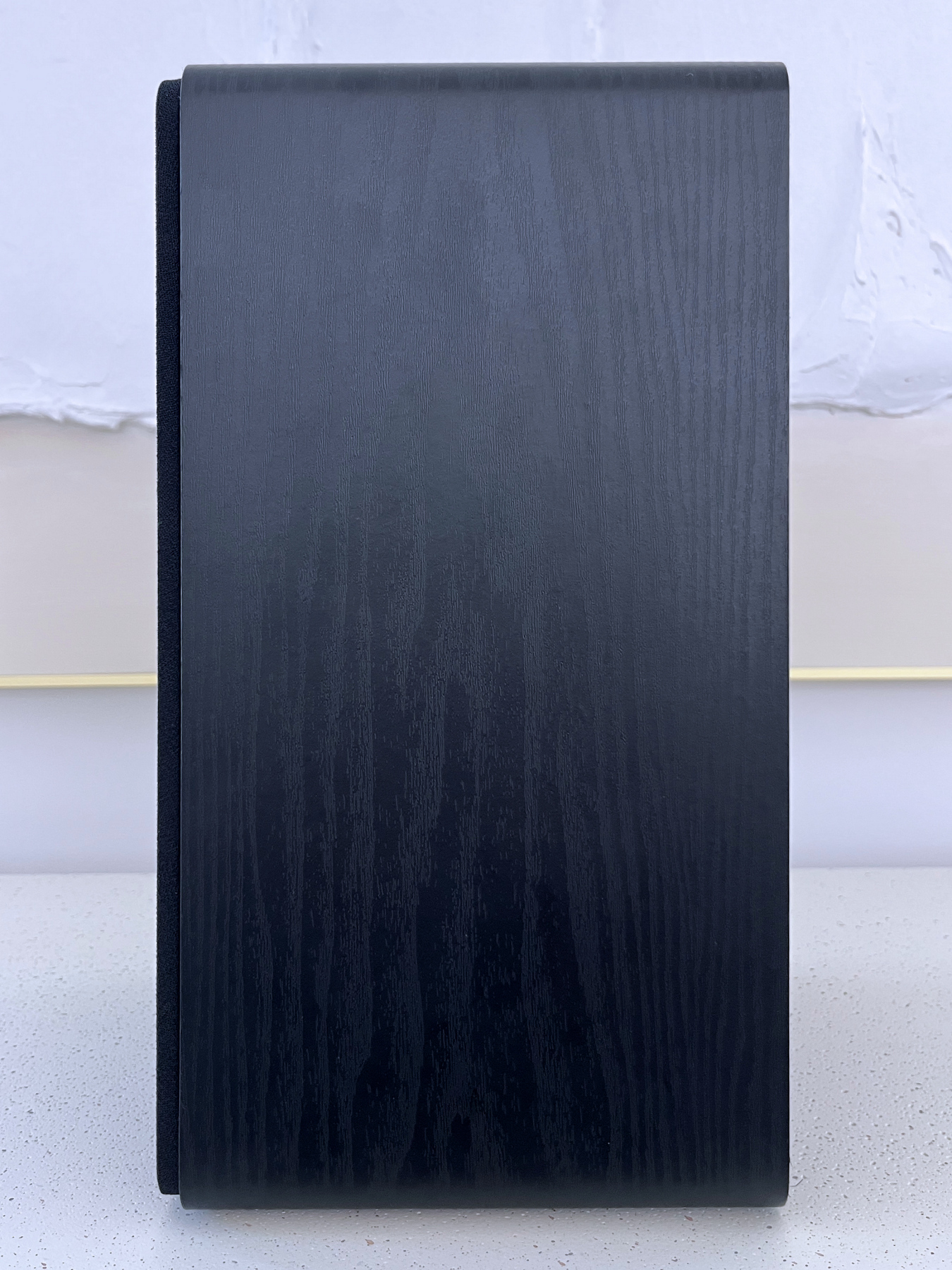
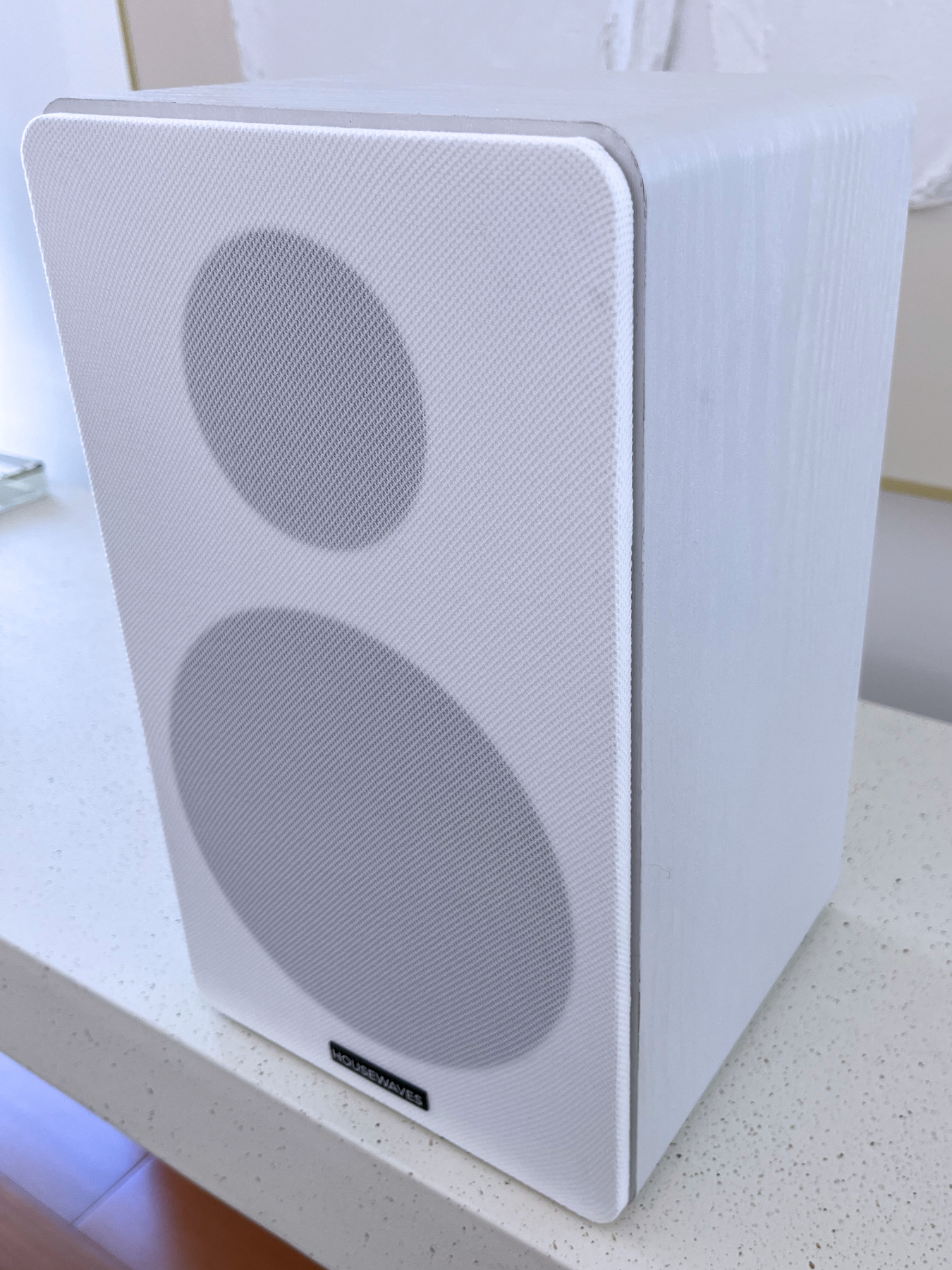
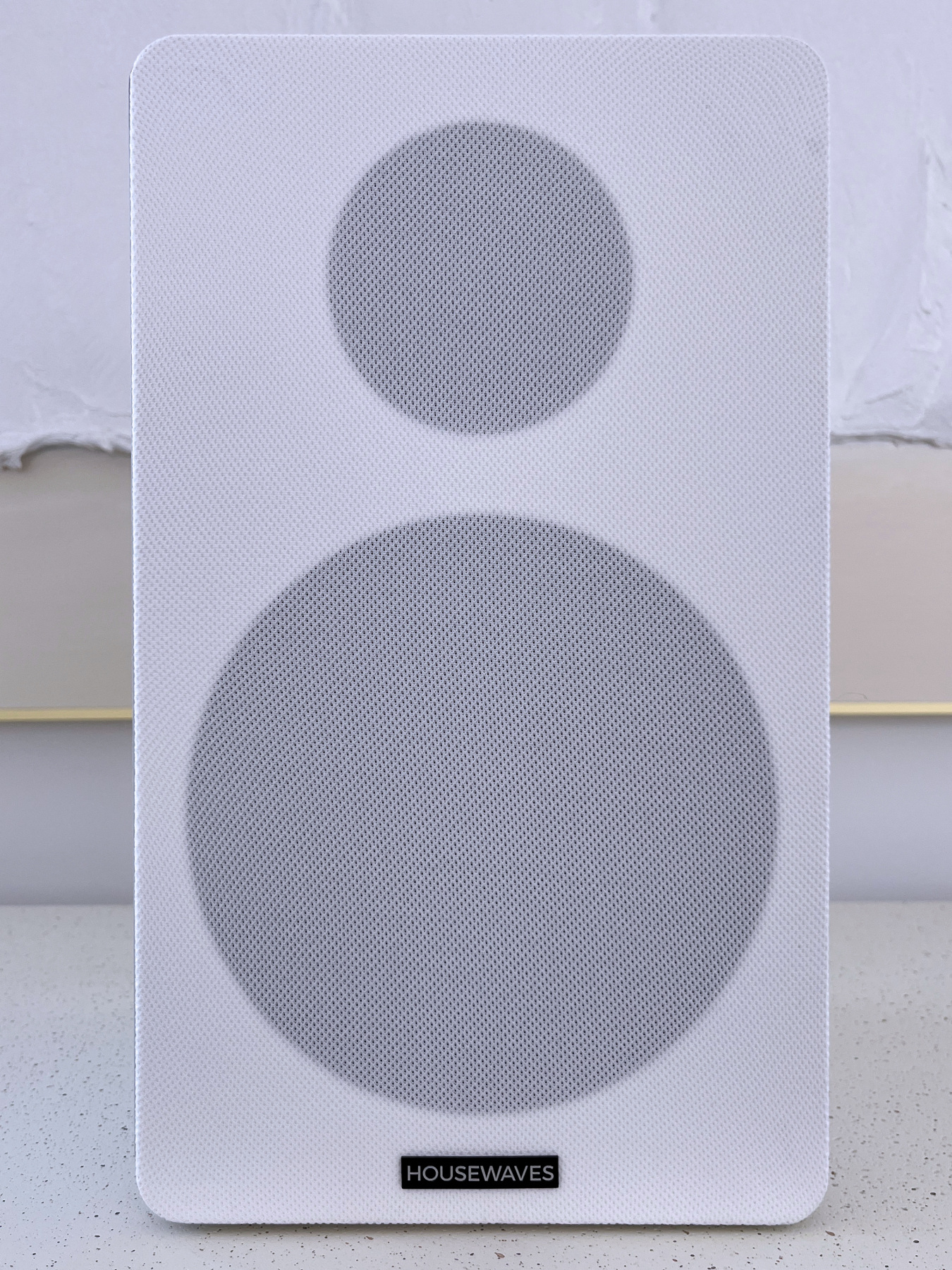
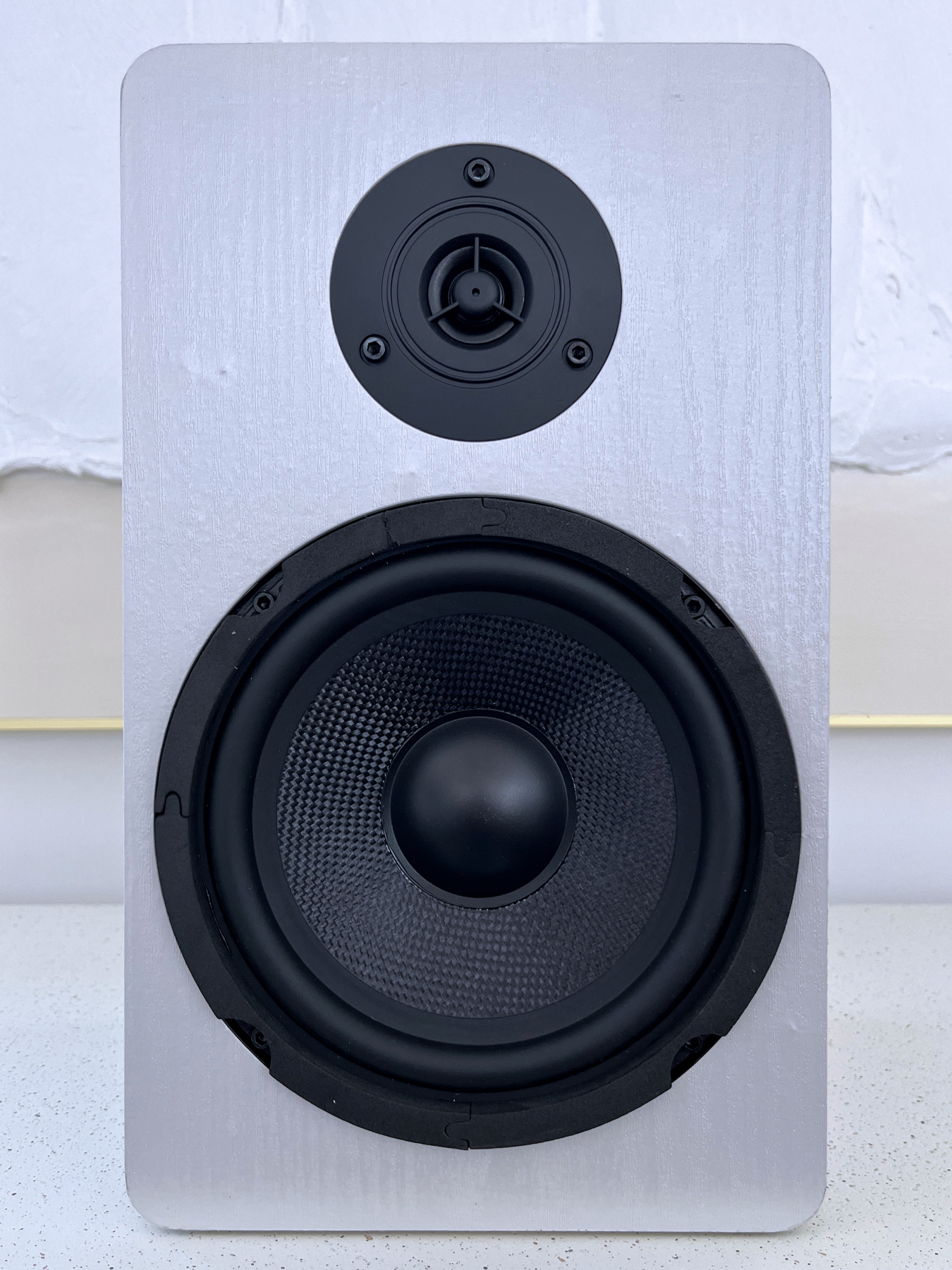
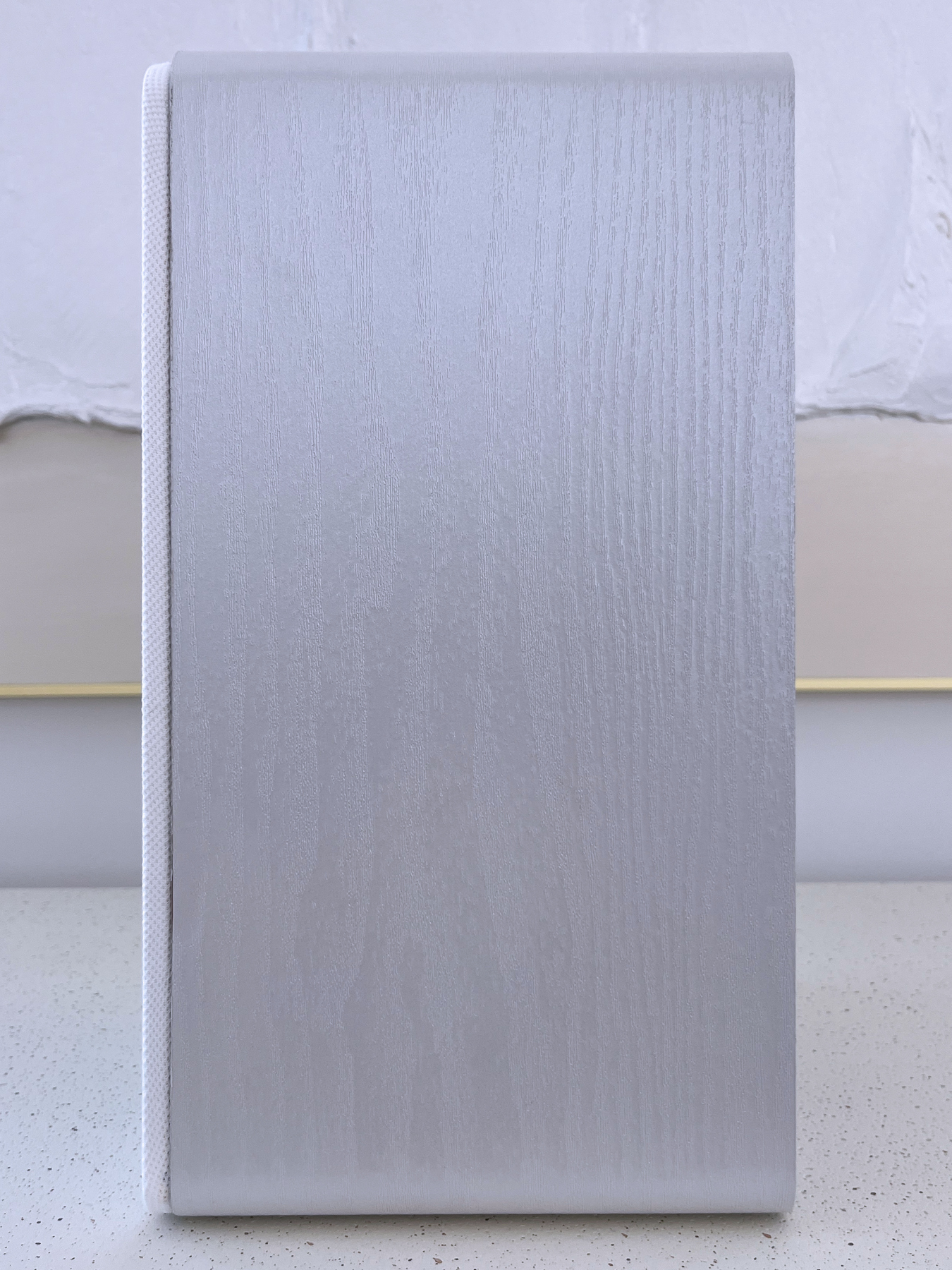
A 6.5-inch Kevlar cone displaces substantially more air than the drivers in our smaller enclosures, and its extended excursion allows it to do so without strain. The cabinet is sealed rather than ported. Low frequencies arrive with weight and resolve cleanly, free of port turbulence at higher output, and placement against a wall or within a shelf does not introduce the exaggerated bass a rear port can produce.
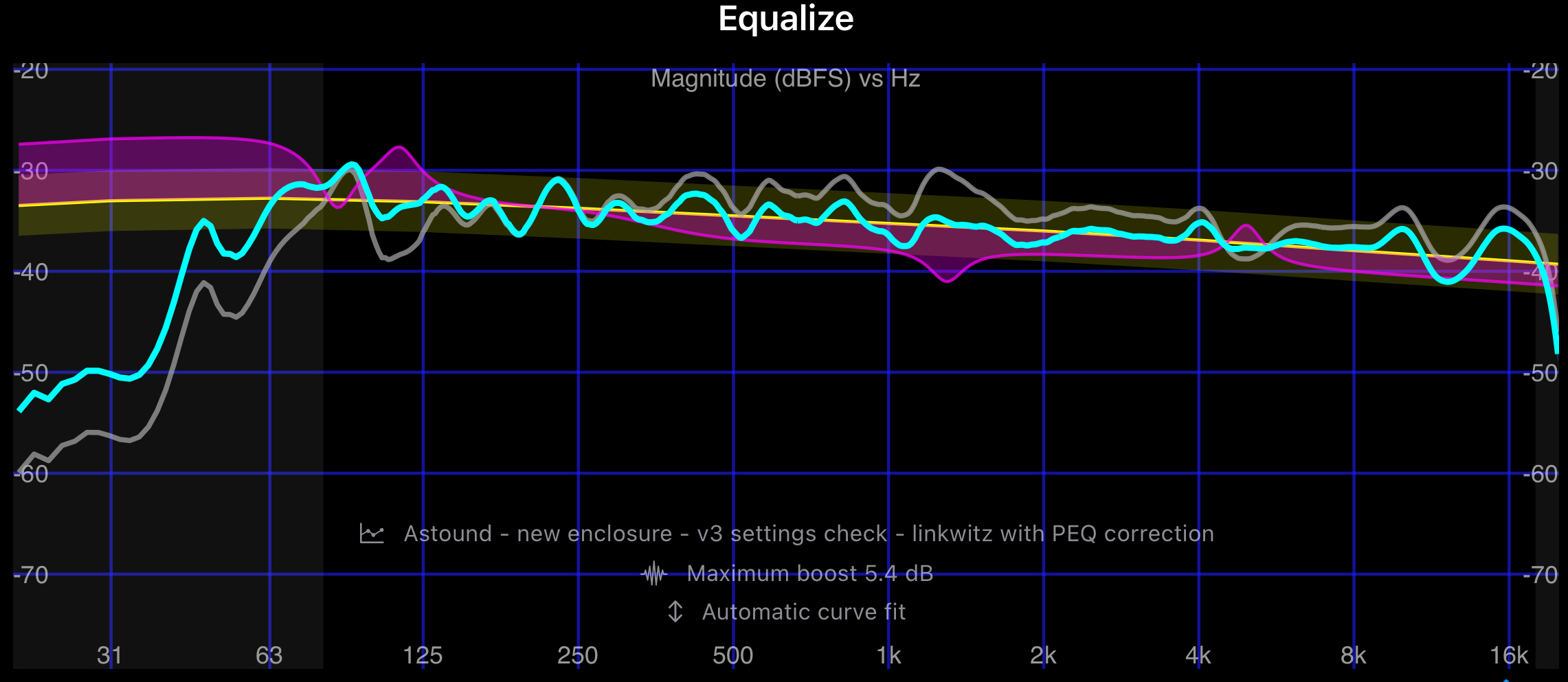
Every driver and enclosure carries its own peaks and dips. Astound-Two is measured, and corrective filters applied in DSP level what those measurements reveal, so no region of the spectrum is advanced or suppressed relative to the rest. Three voicing profiles are provided: Standard, B&K, and B&K with Bass Boost. Further refinement remains available through Music Assistant’s own DSP.
The division between woofer and tweeter is performed in DSP, upstream of amplification. No passive components stand between an amplifier and the driver it controls. Transition frequencies, filter slopes and the relative timing of the two drivers are defined in software, determined by driver behaviour rather than component tolerance, and reproduced identically in every Astound-Two we build.
Woofer and tweeter are driven by separate amplifier channels. Reproducing a bass note requires considerable energy from a 6.5-inch cone; a tweeter demands a fraction of it. Where a single amplifier serves both, the heavy work of the low end competes with the fine detail above it. Dedicating an amplifier to each driver isolates those demands, preserving detail and definition while the woofer is under load.
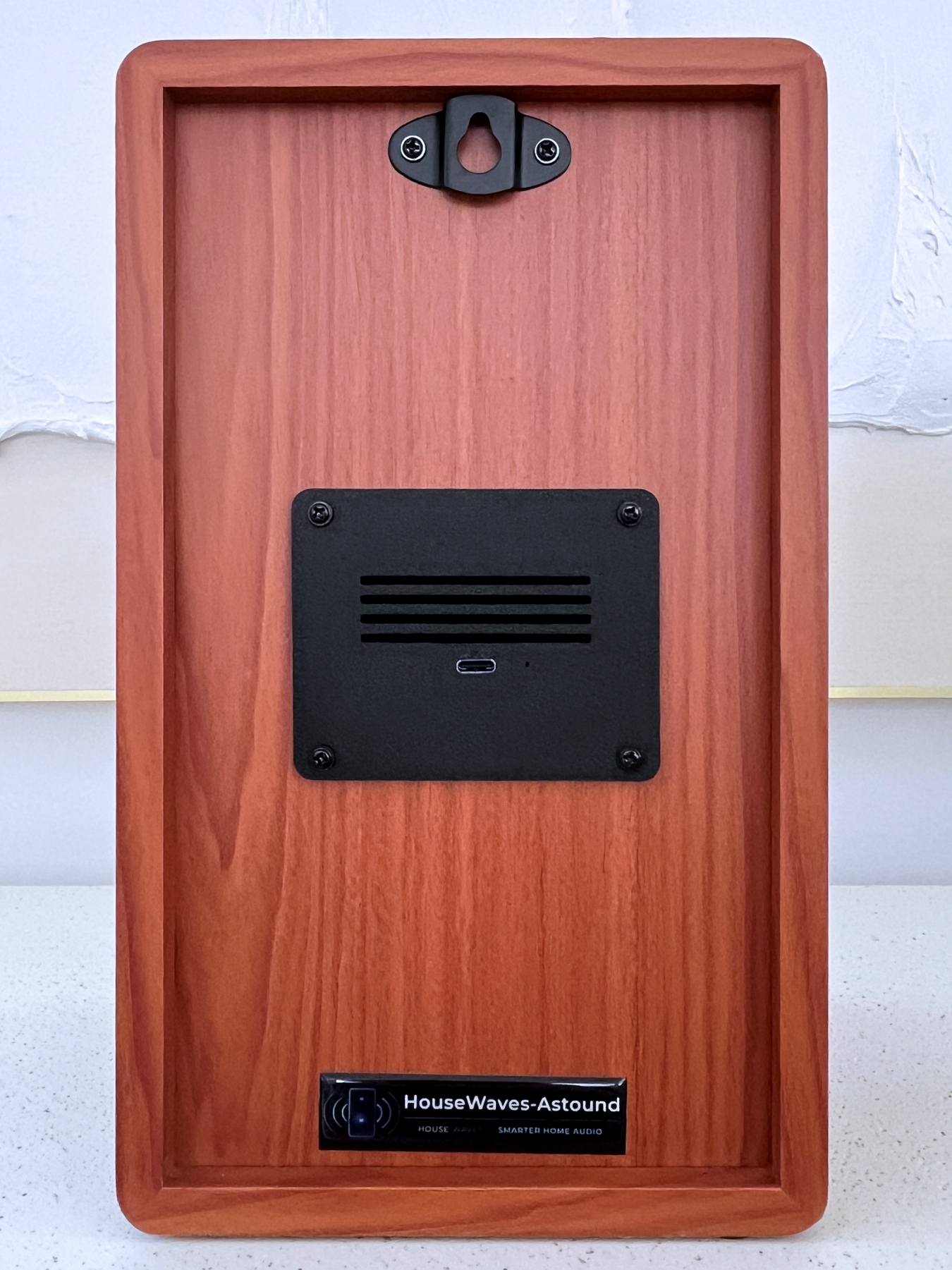
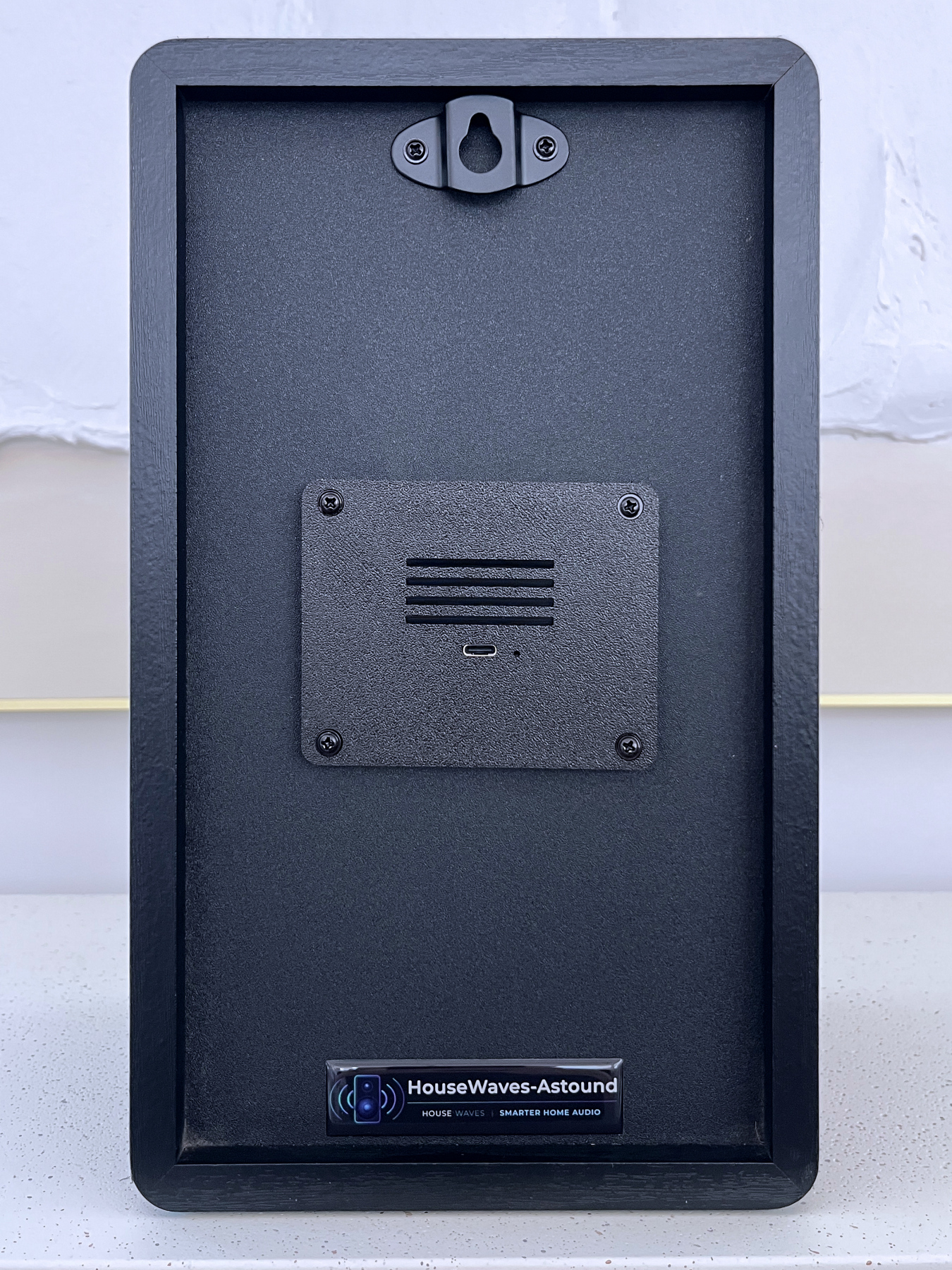
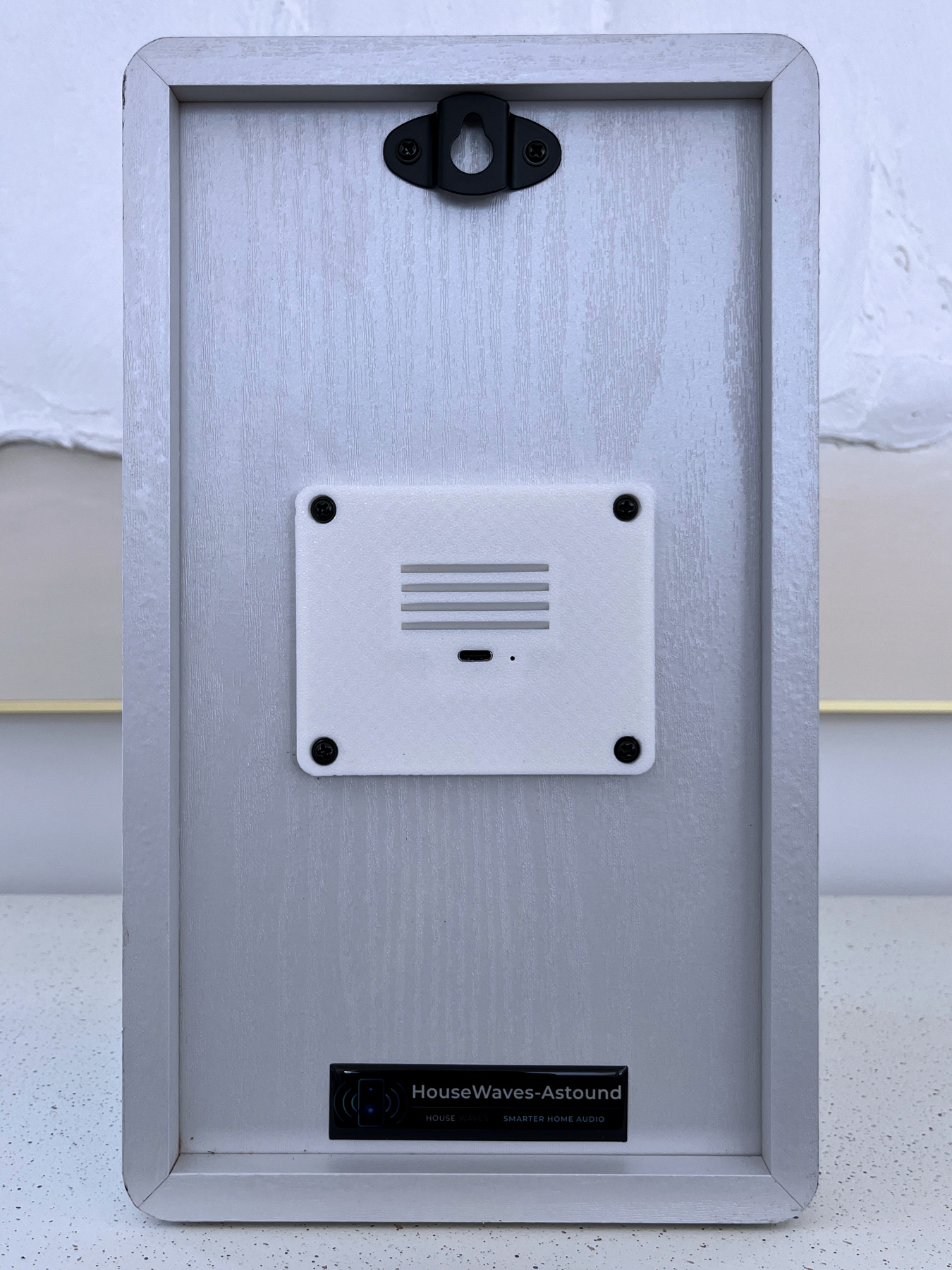
For those who prefer to work under the hood. A USB-to-UART bridge is integrated on the board, so Astound-Two is flashed over its USB-C port alone: no enclosure to open, no button sequence to time, no reset-and-boot procedure. Connect it to a computer, flash from ESPHome or esptool, and read the serial console as it boots. The firmware is yours to replace, and ours is restored over the same connection.
Astound-Two negotiates over USB-C Power Delivery, operating on 5V, 9V, 12V or 15V as the supply allows. A laptop charger, a phone adapter, a USB-C battery pack: it requests the highest profile each can provide and configures itself accordingly. Amplifier output scales with supply voltage, so a higher-voltage adapter affords the woofer greater headroom, while a 5V port remains fully functional. The negotiated voltage is reported in the device portal.
Built on a unified ESP32 controller changes the rules of smart home audio. Our platform merges a dual-core MCU, an I2S DAC and a high-efficiency Class-D amplifier with high-speed PSRAM to manage complex audio streams and reliably deliver clean, full-bodied audio.
Built for ESPHome with SendSpin firmware for synchronized multi-room audio. Compatible with any available ESP32-based firmware including Squeezelite, Snapcast, AirPlay2. Stay flexible and current as Home Assistant evolves. No proprietary apps or cloud lock-ins.
HouseWaves are built for Music Assistant, the powerful multi-room audio platform governed by the Open Home Foundation. We offer an unwavering commitment to hardware that remains open, accessible and exclusively aligned with the Home Assistant ecosystem.